
A Financial and Practical Comparison: When Is It Worth It to Rent a Car Long-Term for a Few Months, and When Is an Operating Lease for 2–3 Years a Better Option?
When a company or self-employed individual is addressing mobility needs, one of the most common questions is whether to choose a long-term car rental or opt for an operating lease. Both solutions offer numerous advantages, but each is suitable for a different situation. The decision isn’t just about the monthly payment. The length of time the vehicle will be used, flexibility, the planned mileage, and the need to respond quickly to changes in business also play an important role.
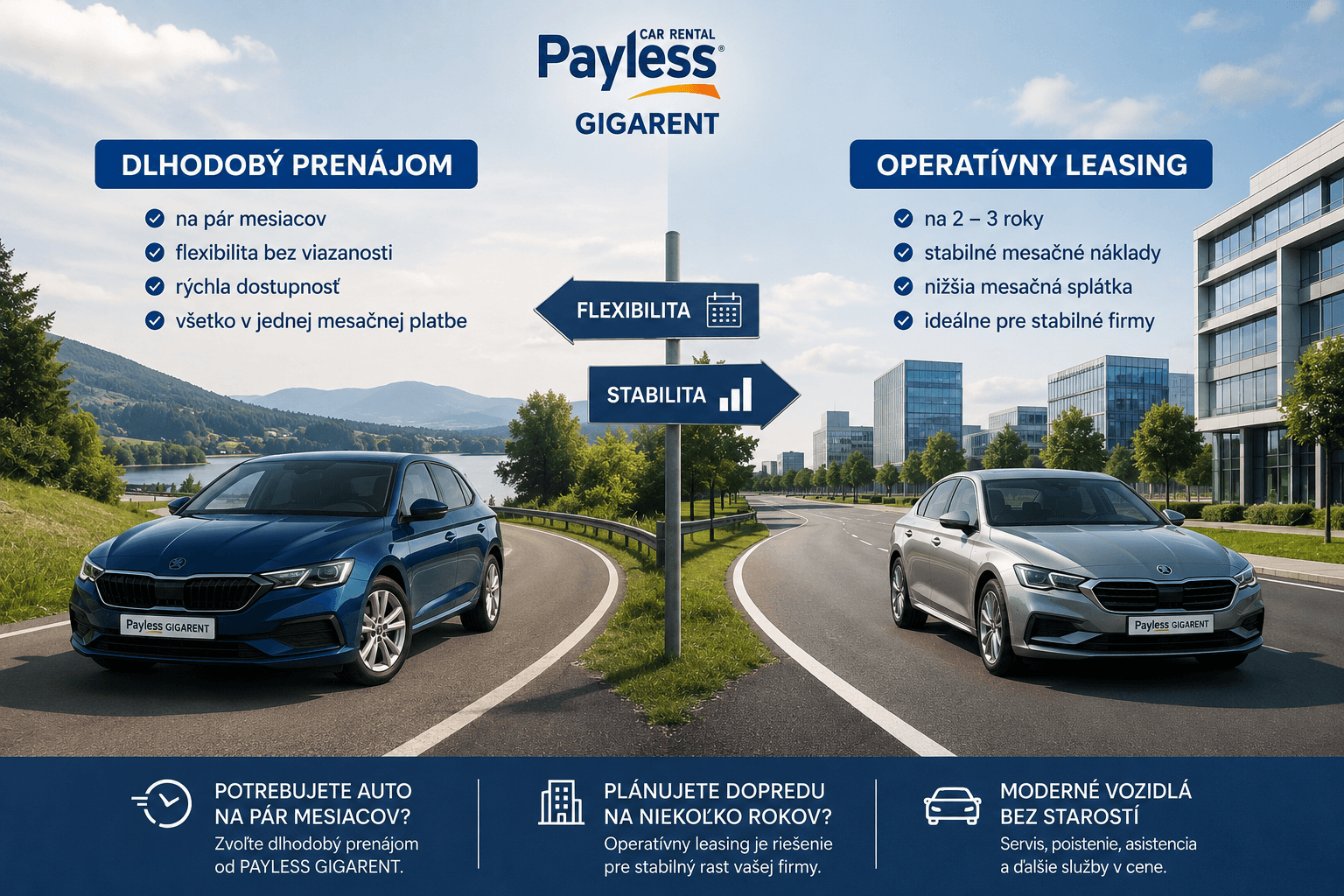
That’s precisely why more and more companies are turning to PAYLESS Gigarent’s services, which allow them to rent vehicles for several months without long-term commitments. On the other hand, if a company needs a stable fleet for several years, an operating lease can result in lower monthly costs and long-term predictability.
In this article, we’ll compare both models from both a financial and practical perspective. You’ll learn in which situations long-term car rental is more advantageous and when it pays to invest in an operating lease.
What Is Long-Term Car Rental?
Long-term car rental is a flexible solution for individuals and businesses that need a vehicle for several weeks or months without being tied to a multi-year commitment.
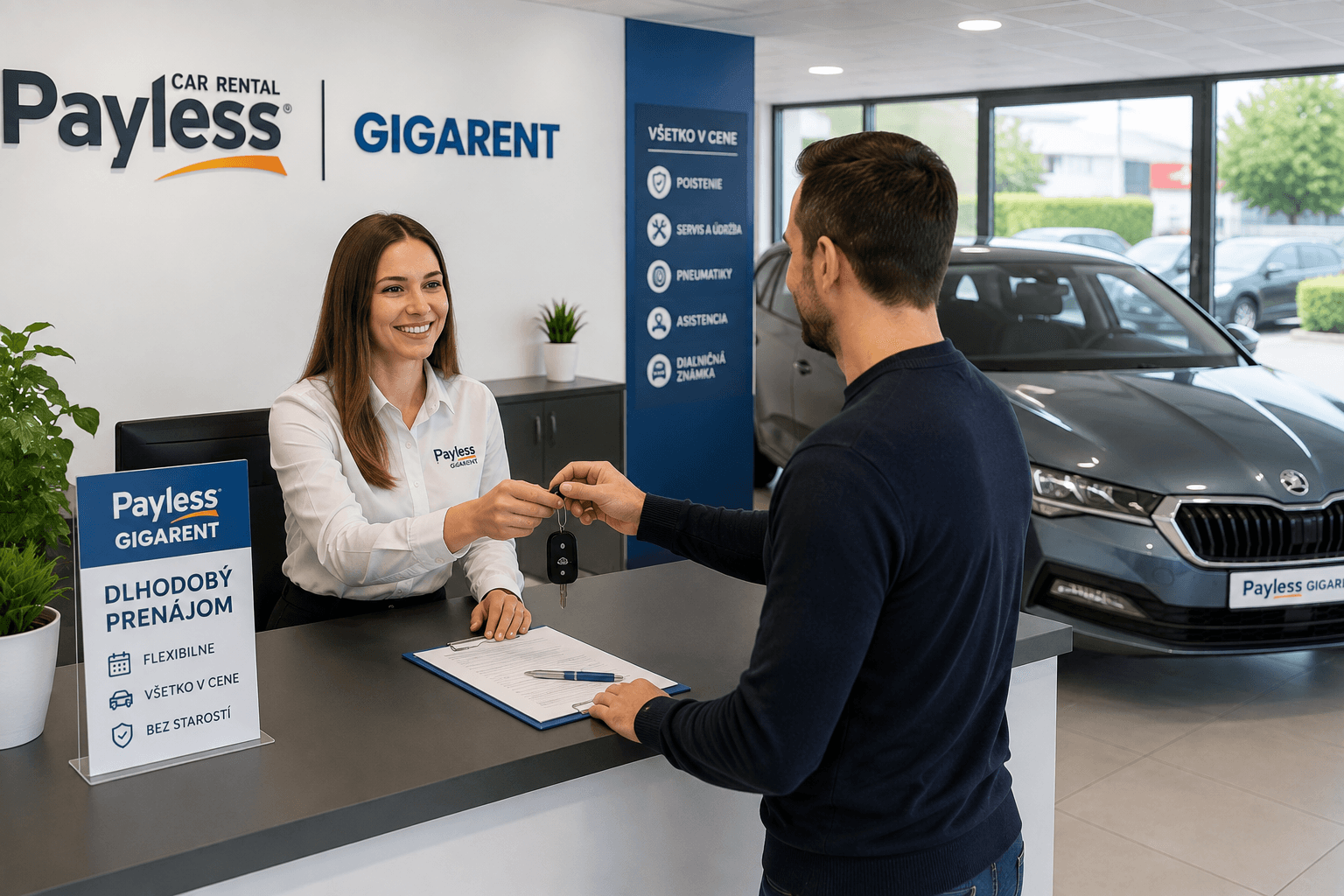
With the PAYLESS Gigarent service, you’ll receive a vehicle ready for immediate use, including services you would otherwise have to arrange on your own.
What’s typically included in the monthly rental fee?
- service and regular maintenance,
- liability and collision insurance,
- a toll sticker,
- roadside assistance,
- seasonal tire changes,
- administration related to vehicle operation.
This means fewer worries and better control over your monthly expenses.
When is a long-term car lease a good idea?
There are many situations where a long-term car lease is more advantageous—both financially and logistically—than an operating lease.
Typical situations
- seasonal team expansion,
- probationary periods for new employees,
- short-term projects,
- replacement vehicle during repairs,
- waiting for a new car to be delivered,
- company expansion into a new region.
In all these scenarios, the biggest advantage is flexibility. You can use the vehicle only for as long as you actually need it.
Operating Lease for 2–3 Years—Who Benefits?
Operating leases are primarily intended for companies that plan to use vehicles on a long-term basis. The contract is typically concluded for 24 to 48 months, with monthly payments remaining stable throughout the entire lease term.
This solution is particularly suitable for businesses that have:
- a stable number of employees,
- predictable vehicle usage,
- long-term business operations,
- a consistent annual mileage.
Thanks to the longer lease term, the monthly payment is generally lower than with short-term solutions.
Financial Comparison: Long-Term Car Lease vs. Operating Lease
When making a decision, it’s important to consider the total cost, not just the monthly payment amount.
Long-term car rental
Advantages:
- no long-term commitment,
- quick access to the vehicle,
- easy termination of the lease,
- minimal paperwork,
- all services included in a single monthly payment.
Disadvantages:
- Higher monthly cost for very long-term use.
Operating Lease
Advantages:
- Lower monthly payments for long-term use,
- predictable costs,
- modern fleet,
- the option to regularly replace vehicles.
Disadvantages:
- contractual commitment,
- fees for early termination,
- less flexibility when needs change.
A Practical Comparison Based on Your Company’s Needs
Not every decision is just about finances. It’s also important how quickly you need to respond to a situation.
| Situation | Long-term car lease | Operating lease |
|---|---|---|
| 3-month project | ✔ Ideal solution | ✖ Not suitable |
| New employee on probation | ✔ Yes | ✖ No |
| Seasonal production | ✔ Yes | ✖ No |
| Stable fleet for 3 years | ✖ Less advantageous | ✔ Ideal |
| Fast vehicle delivery | ✔ Yes | Often requires a wait |
| Maximum flexibility | ✔ Yes | ✖ Limited |
How to decide?
Before making your choice, answer a few questions.
Checklist
✔ How long will you need the vehicle?
✔ Do you need the option to easily terminate the lease?
✔ Is your headcount stable?
✔ Will you be using the vehicle every day for several years?
✔ Could your company’s situation change quickly?
If you answered “yes” to most of these questions—indicating you need flexibility—a long-term car lease is likely the better option. If you plan to use the vehicle long-term without significant changes, an operating lease may be the more cost-effective choice.
Why are companies increasingly turning to PAYLESS Gigarent?
The business environment is changing faster than ever before. Companies are hiring employees for projects, expanding branches, or responding to seasonal demand. That’s precisely why interest in flexible mobility solutions is growing.
PAYLESS Gigarent offers the opportunity to use modern vehicles without high upfront investments or multi-year commitments. Companies receive a vehicle virtually immediately, and the monthly payment covers most operating costs.
This solution saves administrative time, simplifies corporate expense planning, and allows companies to respond quickly to changing business needs.
Conclusion
The decision between long-term car rental and operating lease depends primarily on the duration of vehicle use and the level of flexibility the company needs. If you’re looking for a solution for a few months, don’t want to commit to a long-term contract, and need a vehicle immediately, a long-term car rental is usually the most practical choice.
Conversely, if you plan to use the vehicle for two to three years, have a stable fleet, and want to optimize your monthly costs, operating lease may be a more advantageous solution.
PAYLESS Gigarent’s services allow both companies and entrepreneurs to choose flexibility without compromise and tailor their mobility to their current business needs.
Frequently Asked Questions (FAQ)
Is long-term car leasing also suitable for self-employed individuals?
Yes. It is used by sole proprietors, small businesses, and large companies that need a vehicle for several months without long-term commitments.
What is the main advantage of long-term car rental?
The biggest advantage is flexibility. You use the vehicle only for as long as you actually need it.
When is an operating lease a good option?
Especially when you plan to use the vehicle for two to four years and have stable business mobility needs.
Are services included in the monthly payment?
In most cases, yes. The monthly fee includes maintenance, insurance, roadside assistance, and other operational services depending on the specific product.
Can I simply return the vehicle at the end of the lease?
Yes. With a long-term rental, the process of terminating the contract is generally simpler than with a multi-year lease.